2012 | Gold Innergy Award
Gravity physics by inquiry: investigating the Solar System from the classroom
The 2012 Gravity Physics by Inquiry award captures the early power of simulation-based inquiry. It invited students to use models to ask questions that would otherwise be impossible to investigate directly in school.
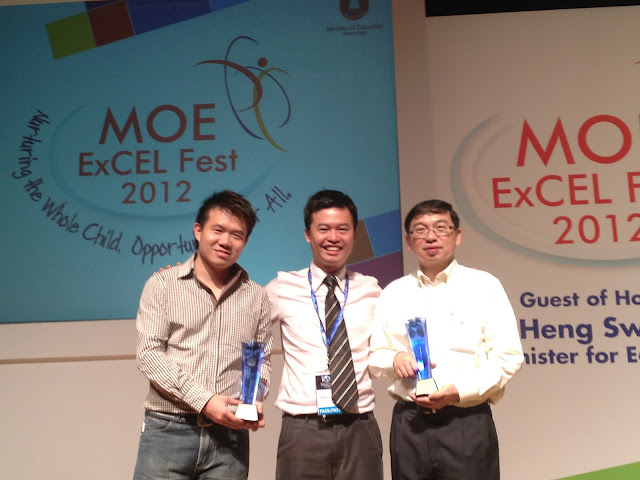
Why This Award Matters
The 2012 Gravity Physics by Inquiry award captures the early power of simulation-based inquiry. It invited students to use models to ask questions that would otherwise be impossible to investigate directly in school. The deeper achievement is not just the prize. It is the design habit behind the work: start from a real classroom problem, build something teachers and students can use, and keep improving it until the technology helps thinking become visible.
Strengths Worth Noticing
- Uses simulation to make astronomical-scale inquiry classroom-accessible.
- Encourages learners to vary conditions, observe outcomes, and explain patterns.
- Connects physics models with student questions about real systems.
Alignment to EdTech Masterplan 2030
The EdTech Masterplan 2030 calls for technology-transformed learning, stronger use of AI and digital tools, and a student-centred approach to teaching and learning. This award connects to that direction in three practical ways:
- Supports inquiry learning through interactive digital models.
- Develops scientific and digital literacy together.
- Anticipates customised learning through controllable simulation environments.
Classroom Conversation Starter
Ask a teacher team: what part of this award can be made smaller and used next week? A simulation, a sensor task, a scaffolded SLS activity, an automation script, or an AI-supported manipulative becomes powerful when it is attached to a clear learning question.